Introduction
Businesses are moving beyond AI that simply answers questions or creates content. A newer approach, know as AI agents, is designed to help with goals and workflows by using information, tools and connected systems to complete multiple steps of a task.
For example, an AI agent may help qualify a sales lead, organize a customer request, gather information, or move a task through several stages of a business process. Unlike a basic chatbot, an agent can be designed to work toward a specific goal rather than only respond to individual messages.
This guide explain what AI agents are, how they differ from traditional AI assistants and chatbots, where businesses can use them, which tools support agent-based workflows and what companies should consider before adopting them.
What Are AI Agents for Business?
AI agents are AI-powered systems designed to work toward a specific goal rather than simply provide a single response. They can understand instructions, use available information, interact with connected tools and complete multiple steps within a workflow.
For example, a business could use an AI agent to handle a new sales lead by collecting relevant information, organizing the details and passing the lead to the appropriate team. This makes AI agents particularly useful for processes that involve several connected tasks instead of one simple question or command.
AI Agents vs. AI Assistants vs. Chatbots
AI agents, AI assistants and chatbots are related, but they serve different purposes. A chatbot mainly communicates with users and provides responses, often within a specific service. An AI assistant can support a wider range of tasks, such as writing, research, planning and organizing information.
AI agents go a step further by working toward a defined goal and potentially completing several actions through connected tools. This makes them especially useful for business workflows where a task requires more than simply generating an answer.
How Do AI Agents Work?
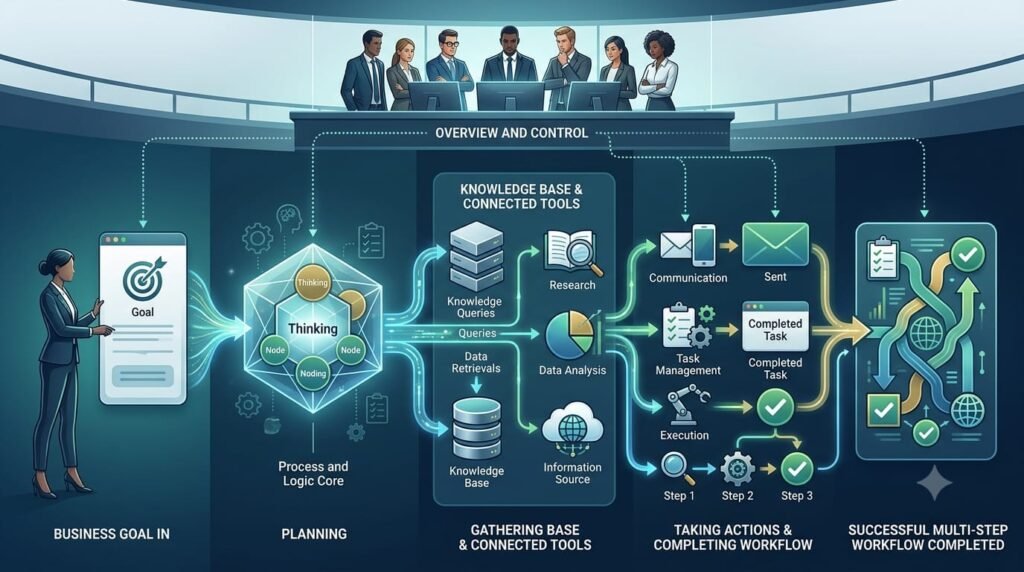
AI agents generally begin with a goal or instruction and then determine the steps needed to work toward it. Depending on their design, they can gather information, analyze it, use connected software and take actions within a defined workflow.
For example, an agent handling a customer request might first understand the issue, check relevant information in a business system and then take the appropriate next step. Human oversight can still be included at important points, especially when an action involves sensitive information or a significant business decision.
What Can AI agents Do for a Business?
AI agents can support businesses in workflows where several steps need to be completed in sequence. Their usefulness depends on the systems they can access and the tasks they are authorized to perform.
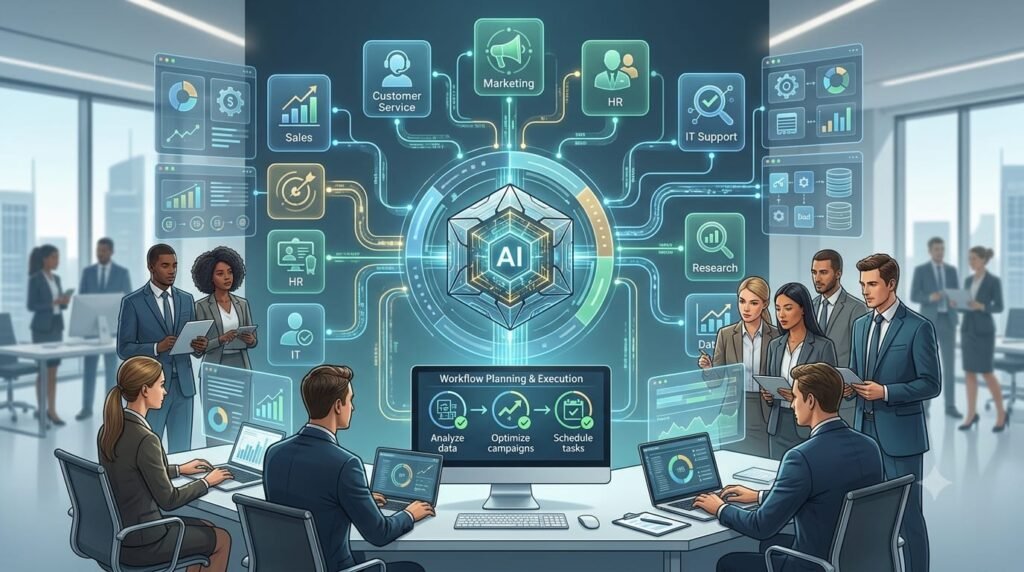
Common applications include:
- Customer service: Handling requests, finding relevant information and routing complex issues to human agents.
- Sales: Organizing leads, gathering customer information and supporting follow-up processes.
- Marketing: Assisting with research, content workflows and campaign-related tasks.
- Human resources: Helping organize employee requests, documents and routine processes.
- IT support: Assisting with troubleshooting, information retrieval and repetitive technical workflows.
- Research: Collecting and organizing information from different sources to support business decisions.
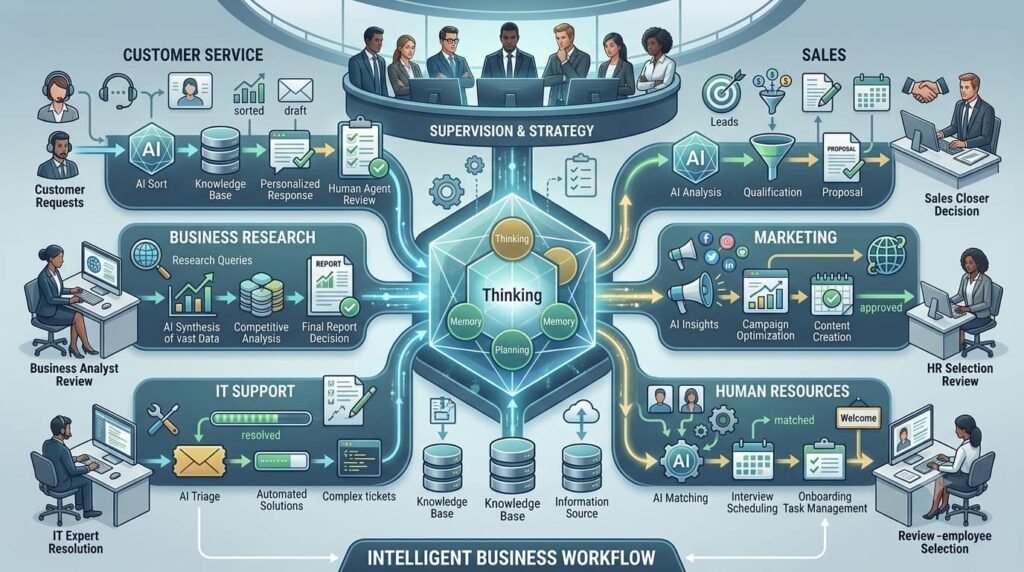
This important points is that an AI agents is most useful when it is connected to a specific business workflow. Simply adding an agent without a clear purpose does not automatically improve productivity.
AI Agents in Customer Service
Customer service is one of the areas where AI agents can provide practical value. AI Agents for Business can help companies handle routine customer service tasks more efficiently. An agent can handle parts of a customer request, retrieve relevant information and move the issue through a defined support workflow. This can reduce the amount of routine work that human support teams need to handle manually.
For more complex or sensitive issues, the agent can pass the conversation to a human employee. This creates a balance in which AI handles suitable routine processes while employees remain available for situations that employees remain available for situations that require judgment, empathy or a deeper understanding of the customer’s problem.
AI Agents for Sales and Lead Management
AI agents can also support sales teams by handling parts of the lead management process. For many companies, AI Agents for Business can make lead management more organized and efficient. An agent can collect information about potential customers, organize leads according to defined criteria and help sales teams identify which opportunities may need attention first.
After a lead enters the system, an agent can assist with routine follow-up tasks and keep relevant information organized. This can reduce manual administrative work and allow sales professionals to spend more time on conversations, relationship building and decisions that require human judgment.
AI Agents for Marketing
AI agents can support marketing teams by handling parts of research, content workflows, audience analysis and campaign preparation. Instead of completing each step manually, marketers can use agents to organize information and move routine tasks through a defined process.
For example, an agent can help gather information about a target audience, organize research findings and prepare material for a campaign workflow. Human marketers can then review the work, refine the strategy and make the final creative decisions. This approach can save time while keeping human judgment at the center of marketing activities.
AI Agents for Human Resources
Human resources teams can use AI agents to support routine processes such as organizing employee requests, managing information and helping employees find answers to common workplace questions. This can reduce the amount of repetitive administrative work handled manually.
For example, an AI agent could guide an employee through a standard HR request and retrieve relevant information from approved company systems. However, sensitive employee matters and important decisions should remain under human supervision. In HR, efficiency is useful, but privacy, fairness and human judgment are equally important.
AI Agents for IT Support
AI agents can help IT teams manage routine technical requests and support workflows. They can understand a reported issue, find relevant information from approved knowledge bases, guide users through standard troubleshooting steps, and route more complicated problems to the right team.
This can reduce the workload created by repetitive support requests and help employees receive assistance more quickly. However, actions that could affect systems, security, or important business data should be controlled carefully, with appropriate permissions and human review.
AI Agents for Business Research
AI agents can also support research by gathering, organizing and summarizing information from approved sources. Instead of manually moving between different documents or systems, an agent can help bring relevant information together into a more structured format.
This can be useful for market research, competitor analysis, internal reports and early-stage business planning. However, research results should still be reviewed carefully. An agent may misunderstand information or produce incomplete conclusions, so human verification remains important before the findings are used for major business decisions.
Popular AI Agent Tools for Business
Businesses have access to a growing range of AI agent platforms, but each tool is designed for different needs. Some focus on customer service and sales workflows, while others are built for enterprise automation, data management or enterprise automation, data management or integration with existing business software.
| AI Agent Tool | Main focus | Best For |
| Microsoft copilot studio | Custom AI agents and business workflows | Businesses using the Microsoft ecosystem |
| Salesforce Agentforce | AI agents for CRM and customer workflows | Sales and customer service |
| Google Vertex AI | Building and deploying AI agents | Businesses needing customizable AI solutions |
| Amazon Bedrock | Generative AI and agent development | Enterprise AI applications |
| IBM Watsonx | Enterprise AI and automation | Organizations focused on governed AI |
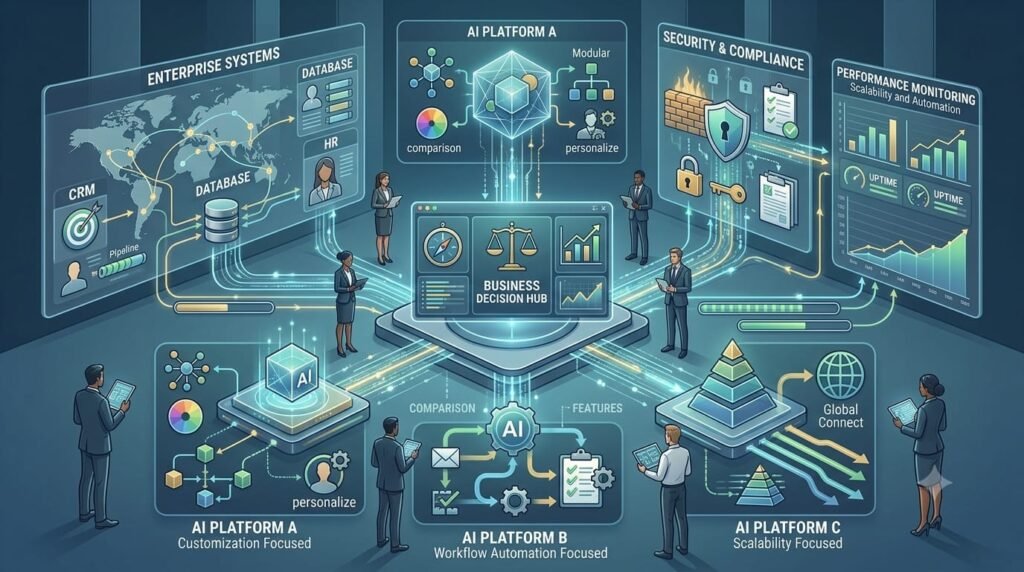
The right choice depends on business problem, existing software, integration requirements, data policies and level of customization needed. A company should therefore compare tools according to its actual workforce compare tools according to its actual workflow instead of choosing a platform simply because it offers more features.
How to choose the Right AI Agent for Your Business?
Choosing an AI agent should begin with the business problem you want to solve. A company focused on customer support may need a different solution from a business looking to automate sales, research or internal operations.
Before selecting a platform, businesses should consider integration, security, scalability, cost, customization and ease of use. It is also important to understand what actions the agent will be allowed to perform and where human approval will be required.
The best AI agent is not necessarily the one with the longest list of features. It is the one that fits naturally into an existing workflow and provides measurable value without creating unnecessary complexity.
Benefits of AI Agents for Business
AI agents can help businesses reduce repetitive work and improve the way information moves through everyday workflows. By handling suitable multi-step tasks, they can save employees time and allow teams to focus on work that requires communication, creativity, and decision-making.
Another advantage is scalability. An AI agent can support routine processes across different departments without requiring every task to be handled manually. However, the greatest value comes when businesses use agents for clearly defined processes and combine their efficiency with appropriate human oversight.
Challenges and Risks of AI Agents
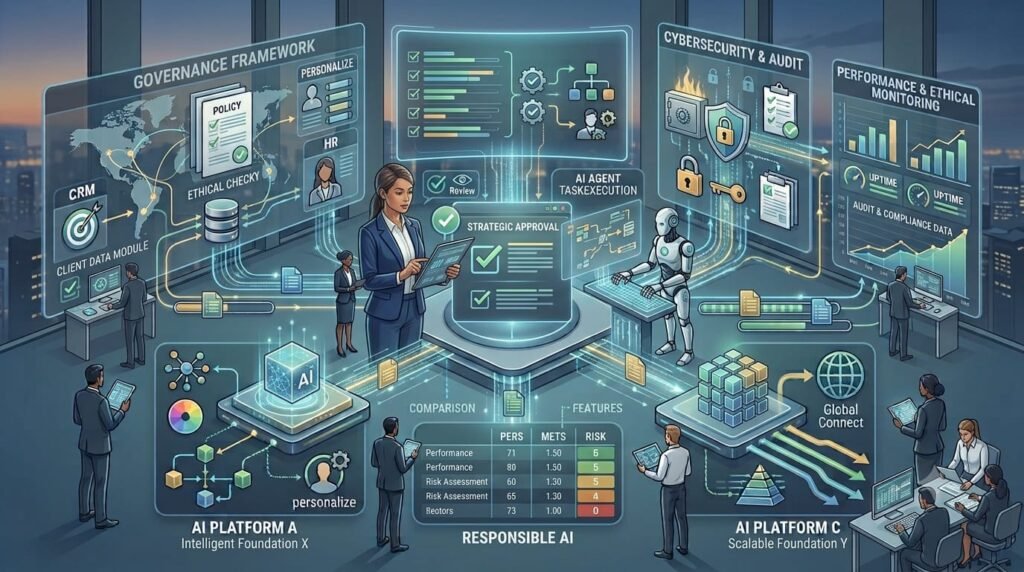
AI agents can automate complex workflows, but greater autonomy also creates new risks. An agent may misunderstand an instruction, use incorrect information, or take an unsuitable action if its permissions and rules are not properly defined.
Businesses also need to consider data privacy, security, accuracy and human oversight. Agents should not be given unlimited access simply for the sake of automation. Clear boundaries, regular monitoring and human approval for important decisions can help businesses gain the benefits of AI agents while keeping their risks under control.
How to Implement AI Agents Successfully
Businesses should start with a clear and manageable use case instead of trying to automate an entire department at once. A company might begin with customer support, lead qualification, or internal research and measure whether the agent actually saves time or improves the workflow.
Before expanding its use, the business should define the agent’s responsibilities, connect only the necessary systems and establish clear approval points for important actions. Regular monitoring is also essential because AI agents need to be reviewed and improved as business processes and customer needs change.
The Future of AI Agents in Business
AI agents are likely to become more capable as they gain better access to business data software and specialized tools. Instead of simply responding to instructions, future agents may manage larger parts of a workflow, coordinate between different systems and adapt their actions to changing situations.
However, greater autonomy will also make responsible oversight more important. Businesses will need clear rules about what agents can access, what actions they can take, and when a human must approve a decision. The future of AI agents will therefore depend on finding the right balance between automation, control and human judgment.
FAQs
What are AI agents for business?
AI agents are AI-powered systems that can work toward specific goals by understanding instructions, using information and completing multiple steps within a business workflow.
How can AI agents help businesses?
AI agents can support customer service, sales, marketing, HR, IT, research and other workflows by reducing repetitive work and helping employees manage information more efficiently.
What is the difference between an AI agent and an AI assistant?
An AI assistant generally helps users with tasks and information, while an AI agent can be designed to work toward a goal and complete multiple actions within a defined workflow.
Are AI agents safe for businesses?
They can be used safely when businesses apply appropriate permissions, security controls, monitoring and human oversight. Sensitive information and important decisions require particular care.
Can AI agents replace employees?
AI agents can automate certain tasks, but they do not eliminate the need for human judgment, creativity, communication and decision-making. Their strongest role is usually to support employees and reduce repetitive work.
How should a business start using AI agents?
A business should begin with a specific, manageable workflow, establish clear responsibilities and permissions, measure the results and expand the use of AI agents gradually.
Conclusion
AI agents are becoming an important development in business automation because they can do more than simply answer questions. They can work toward defined goals, use connected tools and complete multiple steps within a workflow.
However, successful adoption requires more than choosing an advanced platform. Businesses need clear use cases, reliable data, appropriate security controls, and human oversight. When these elements are combined, AI agents can reduce repetitive work while helping employees focus on tasks that require judgment, creativity and expertise. AI Agents For Business can be valuable when businesses use them with clear goals, reliable data and proper human oversight.